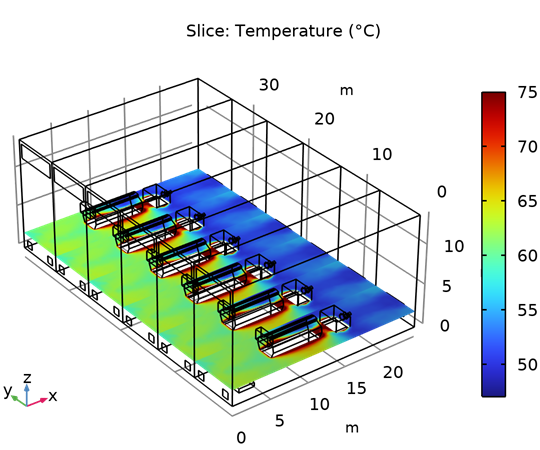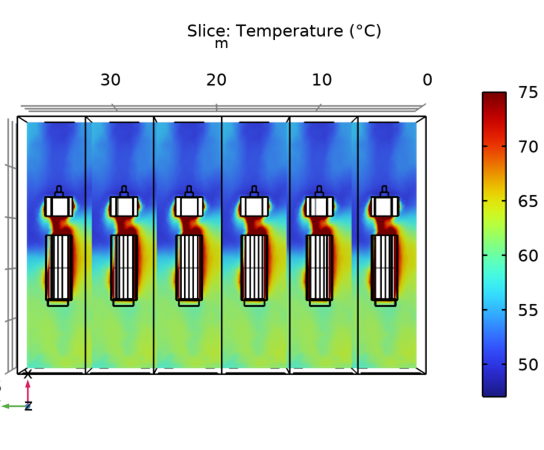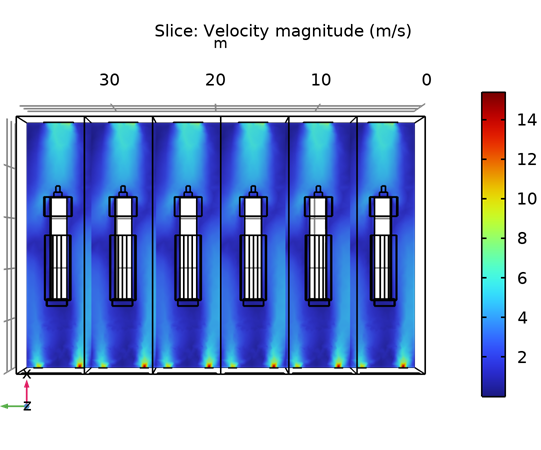

This project showcases Eta One’s use of Computational Fluid Dynamics (CFD) to simulate and optimize the ventilation system of a 6-engine industrial powerhouse — before construction began. The goal was to ensure reliable temperature control, proper airflow, and positive pressure inside the facility, all while evaluating the performance of various fan configurations.
I. Design Objectives
The powerhouse was expected to generate high internal heat loads due to its engine and equipment configuration. Traditional hand calculations or simplified sizing tools couldn’t provide enough insight into how air and heat would behave in real operation.
We used CFD to:
- Predict ceiling and door temperatures under full load
- Visualize air velocity and detect stagnant or overheated zones
- Confirm that selected fans could maintain positive pressure
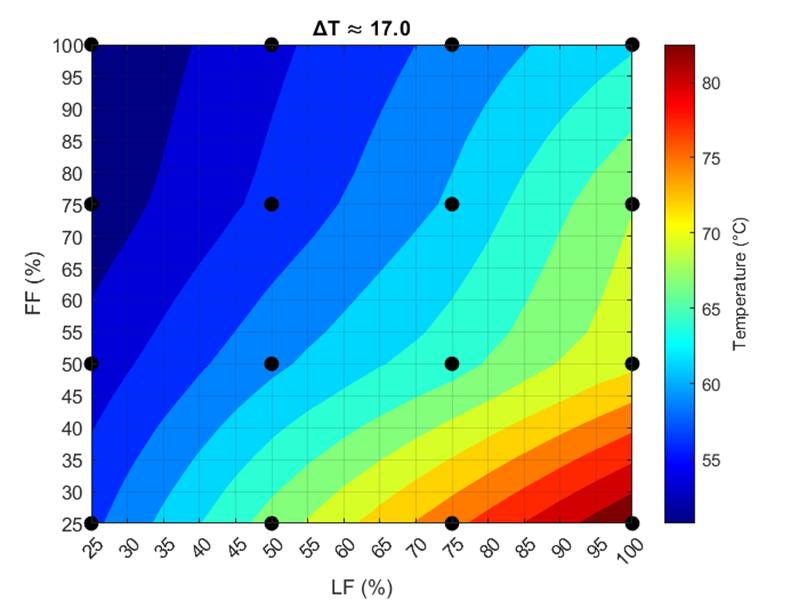
- Support decisions on where to install variable frequency drive (VFD) fans to adapt to real-time needs

II. Simulation Process
Using a 3D model of the facility, we simulated:
- Heat loads from engines and equipment
- Fan operation under different flow rates and static pressures
- Ambient air conditions and internal heat dissipation
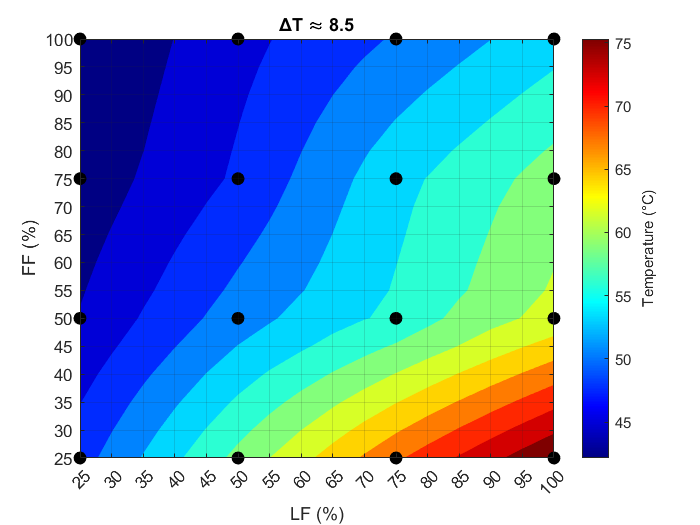
- Multiple design combinations (fan sizes, placement, ΔT) using parametric sweeps
The simulation provided real-time visual feedback — allowing us to identify critical design issues, test solutions quickly, and eliminate guesswork from the design phase.
III. Results & Impact
With the help of CFD, the client was able to:
- Select the most effective VFD fan configuration to respond to variable engine loads
- Ensure ceiling temperatures stayed below required safety limits
- Maintain positive pressure to avoid dust ingress
- Save time and money by avoiding trial-and-error on-site
- Reduce energy consumption by optimizing fan sizing and placement
CFD turned complex engineering questions into clear visual answers — helping the team design faster, smarter, and with full confidence before implementation.